

My TRT App Ships a Full Redesign of Its Android TRT Tracker and Opens Its Affiliate Program
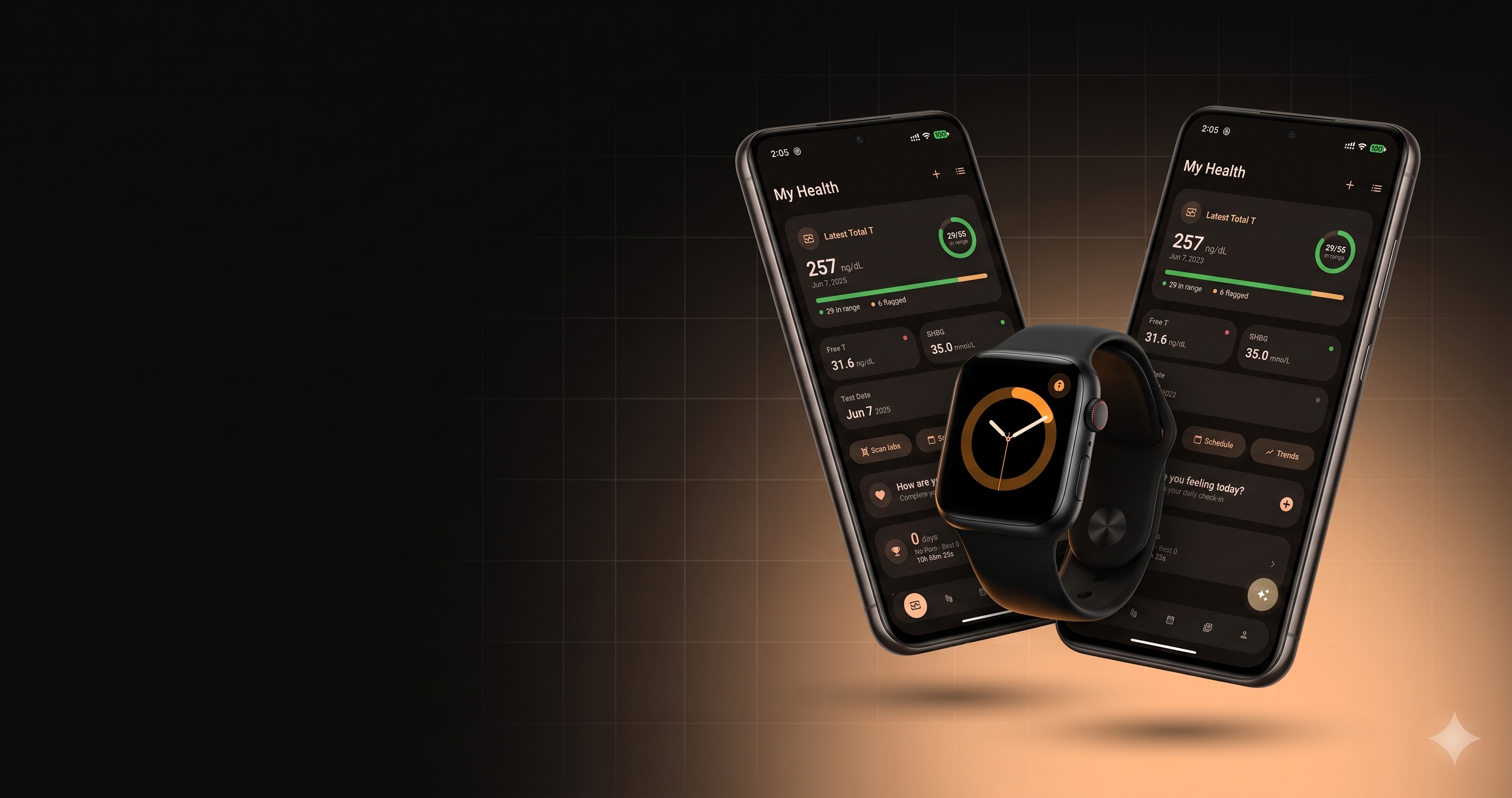
My TRT App 3.0 rebuilds the Android TRT tracker on Google's Material You design system and arrives alongside the company's new affiliate program at mytrt.app/affiliates
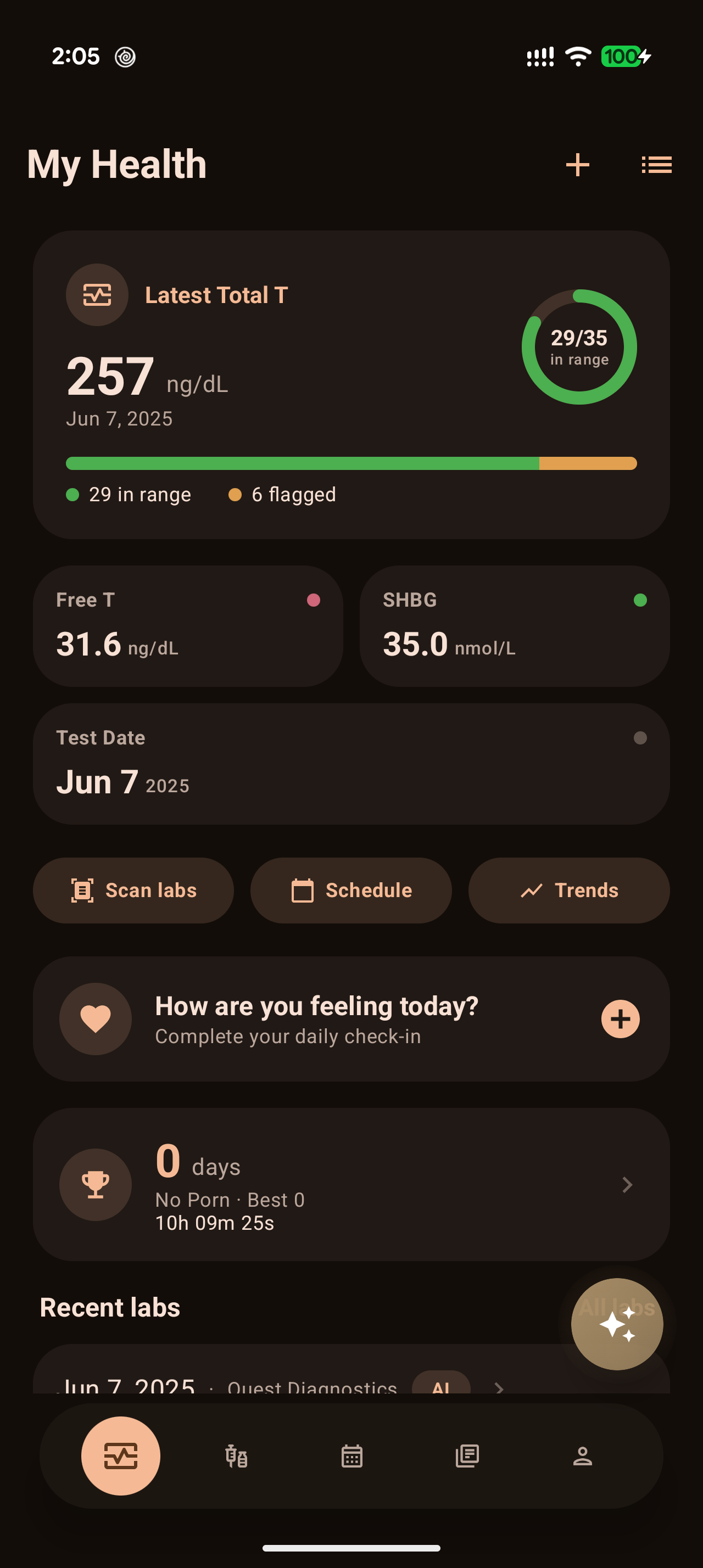
The redesigned labs dashboard in My TRT App 3.0 for Android: latest testosterone results, in-range summary across 35 biomarkers, and one-tap access to lab scanning, scheduling, and trends
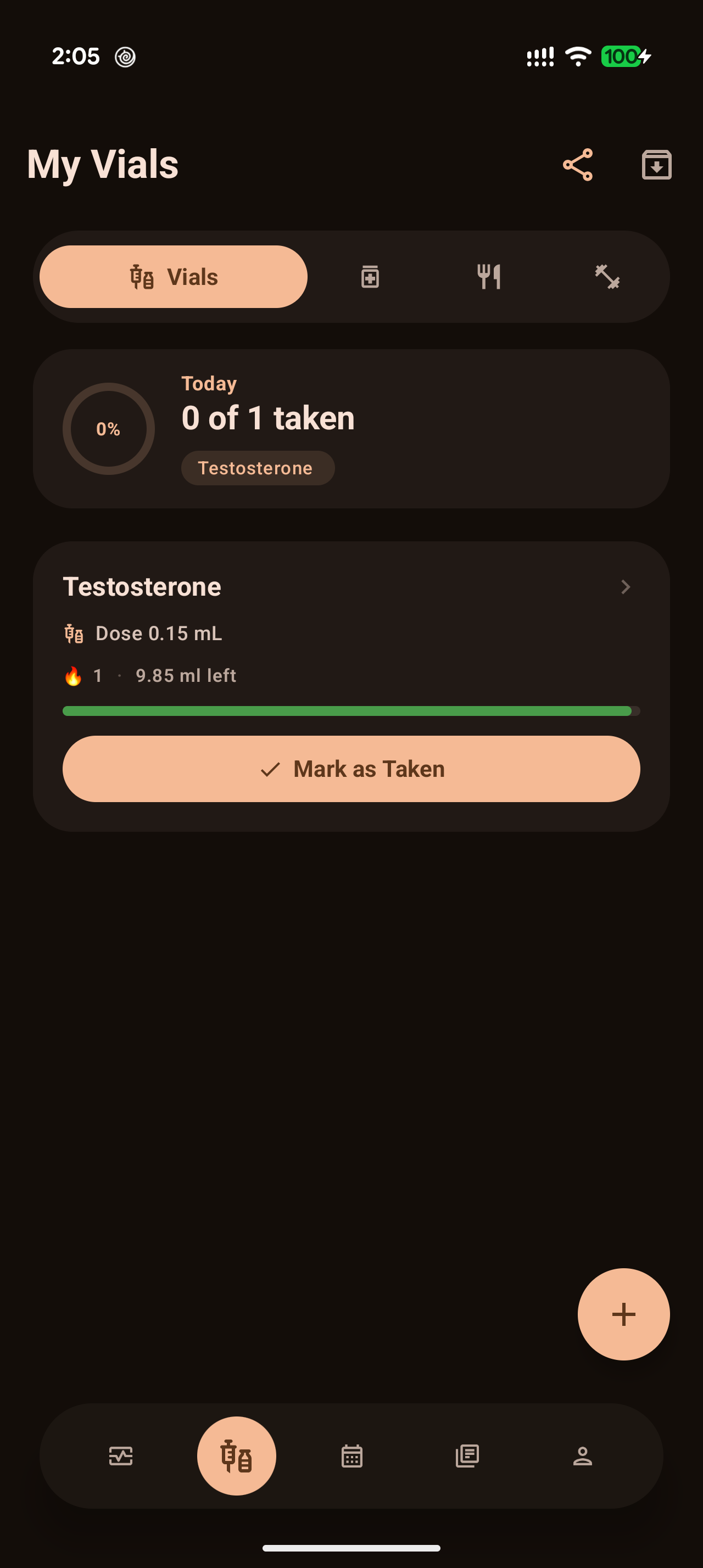
Protocol tracking rebuilt in Material You: today's dose at a glance, one-tap logging, and per-vial inventory that counts down remaining doses in the TRT tracker.

The dose calendar lines up every scheduled injection by day, with reminders that fire on the user's actual protocol schedule.
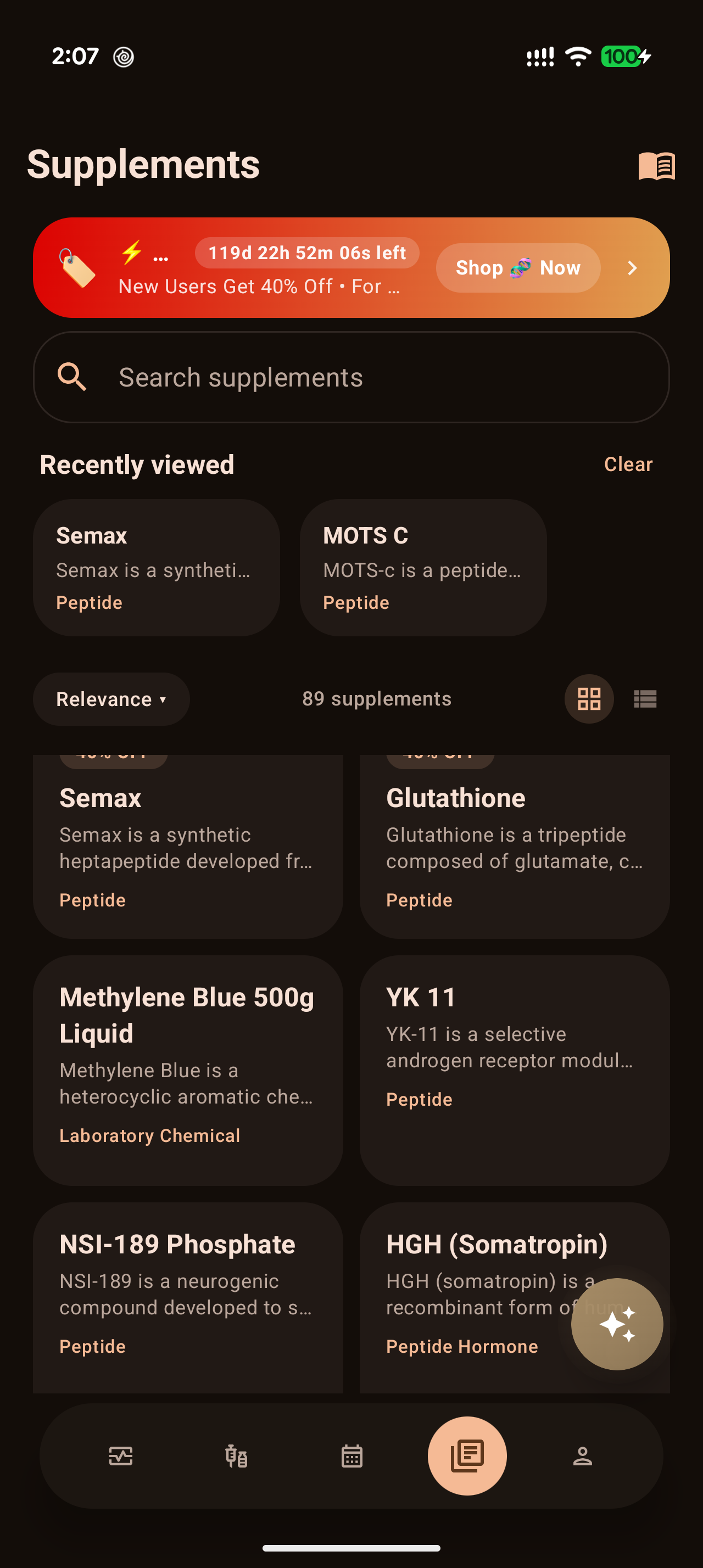
New users are walked through a guided setup — health context, bloodwork status, and their actual protocol — before the first screen of the app appears.
Version 3.0 rebuilds every screen of the TRT tracking app on Android and adds referral codes; the new affiliate program pays users for each subscriber referred.
WASHINGTON, DC, UNITED STATES, September 2, 2026 /EINPresswire.com/ -- My TRT App, the TRT app and protocol tracker for men on physician-supervised testosterone replacement therapy, today released version 3.0 of its Android application — the largest update in the product's history — and announced the launch of its affiliate program, which pays users and creators for each new subscriber they refer.
Version 3.0 arrives as a single release, but it represents months of work across every layer of the product: a complete visual rebuild of the TRT tracking app on Google's newest design language, a rebuilt first-run experience, biomarker education embedded directly into lab screens, and the referral infrastructure that connects the new affiliate program to the app itself.
Why rebuild everything
The company's answer is that tracking a medical protocol is a daily habit, and daily habits live or die on friction. A man on therapy opens this kind of app hundreds of times a year — to log an injection in the seconds after it happens, to glance at a lab trend before a physician appointment, to check when his next dose is due. Version 3.0 was designed around those moments: fewer taps to the common actions, clearer hierarchy on every screen, and an interface that feels native to the phone it runs on rather than imported from somewhere else.
A top-to-bottom redesign
Android 3.0 rebuilds all of the TRT tracking app's roughly sixty screens on Google's Material You design system — not a re-skin, but a screen-by-screen reconstruction. The app now adopts each phone's dynamic color palette, so the interface takes on the tones of the user's own wallpaper and system theme on supported devices, while hand-built palettes remain available for users who prefer a fixed look, including the dark, high-contrast styling the app has been known for since its first release.
Navigation moved to an icon-first floating pill bar that sits above the content rather than spanning the full width of the screen, with a springy selection animation in the expressive style Google introduced across its own applications. Motion was rebuilt throughout: cards, progress rings, and state changes respond with the same physical, spring-based animation vocabulary rather than instant snaps.
Every core surface was redrawn. The labs area presents a summary dashboard with the user's most recent markers, trend directions, and items that may deserve attention on the next physician visit. The protocol area — vials, doses, and schedules — moved to tonal cards with one-tap dose logging and streak tracking. The calendar shows dose history and daily check-ins side by side. The library and profile surfaces follow the same idiom, with circled accent icons, pill-shaped progress indicators, and bold sentence-case type replacing the previous editorial styling.
The redesign also reaches details that long-time users will notice immediately: restyled forms, redrawn empty states, consistent typography from the largest dashboard number down to the smallest caption, and icon labels announced properly to screen readers throughout the new navigation.
A guided first run
New users are greeted by a rebuilt guided setup that walks through a complete first-run in about ten short steps: basic health context such as age and height, lifestyle factors, current bloodwork status, and the user's actual protocol — compound, concentration, dose, and schedule — which the app turns into a live tracking setup with reminders before the first screen of the main interface ever appears.
Each step validates its inputs, so the app starts with clean data rather than empty placeholders: numeric fields check for plausible ranges, the protocol step uses the same validation as the app's full vial editor, and the bloodwork step lets users either import recent results or schedule a reminder to get tested, with the reminder created automatically.
The flow respects the user's time. Steps that do not apply can be skipped and completed later from inside the app, progress is preserved if the user leaves mid-setup, and users who prefer to explore first can defer the entire setup. For returning users, the same system presents a shorter what's-new tour instead of repeating questions the app already knows the answers to.
The labs experience
Lab work is where therapy decisions actually get made, and the labs area is built to hold all of it. Users log results across more than fifty biomarkers spanning the categories physicians typically order for men on therapy: the testosterone panel itself — total, free, and bioavailable testosterone, estradiol, and sex hormone-binding globulin — alongside blood health, metabolic, thyroid, liver, kidney, electrolyte, inflammation, iron, and vitamin markers.
Each marker is charted over time with reference-range indicators, so a user can see at a glance whether a value is trending, stable, or worth a conversation with his physician. Because timing matters in hormone therapy, results can be annotated with context — which lab drew them, and notes about where in the injection cycle the draw occurred, a distinction physicians routinely care about when interpreting numbers.
For Pro subscribers, the app can also extract values from a photographed or uploaded lab report using AI-assisted reading, turning a multi-page PDF into structured, charted results in seconds — with every extracted value editable, since the user's own review is always the final word. A lab scheduling assistant rounds out the area, reminding users when their next draw is due so trend lines never develop long gaps.
Biomarkers, explained where users see them
Version 3.0 also introduces a biomarker reference library inside the app. Marker definitions are now available directly on lab screens, explaining in plain language what each measured value represents, why physicians order it, and what movement in either direction can mean — without the user leaving the result they are looking at.
The in-app definitions draw on the same educational content the company publishes freely on its /learn pages, which cover more than fifty biomarkers relevant to men on therapy alongside free tools such as its testosterone half-life calculator, which visualizes how blood levels rise and fall between injections for common esters, and dose calculators that convert between milligrams, milliliters, and syringe units. The /learn library requires no account and no download; the app brings the same material into the moment where users actually need it.
As with all of the company's educational content, the material explains laboratory concepts in general terms and directs users to their physicians for interpretation of their own results.
Protocol tracking in daily use
The protocol area handles the realities of self-managed therapy rather than an idealized version of it. Users track multiple medications side by side, each with its own concentration, dose, and schedule — weekly, every-N-days, or alternating-week patterns — with reminders that fire on the user's actual injection days. Logging a dose is one tap; logging it with detail, including the injection site, is two.
The app keeps honest books. Doses can be corrected retroactively, skipped days can be recorded as skipped rather than silently missed, and an undo affordance protects against accidental logs — with streak tracking that recalculates correctly through all of it. Inventory tracking counts down remaining doses in each vial so reordering never becomes an emergency, and finished vials move to an archive that preserves the full history. The calendar view lays the entire record out by month, making it straightforward to plan a protocol around travel or schedule changes.
Beyond doses: check-ins and patterns
Because how a protocol feels matters as much as whether it was followed, the app pairs dose history with optional daily check-ins — energy, mood, libido, and sleep quality on a simple scale, plus side-effect notes. Over time, a timeline view lines these ratings up against the dose record, helping users bring specific, dated observations to their physician instead of vague impressions. Milestones and streaks add a light layer of motivation, acknowledging consistency without turning a medical routine into a game.
Referral codes, built into the app
With 3.0, the Android app accepts referral codes at the moment of upgrade: a subscriber enters the code of the person who sent them, and that person is credited automatically once the subscription completes. The system is deliberately strict about fairness — codes must be applied before subscribing, credit is recorded exactly once per subscriber, and self-referrals are rejected.
The mechanics are designed so that a referred user typically types nothing at all. When someone follows a shared link to the app's website and installs from Google Play, the referral code travels with the installation and is pre-filled in the upgrade screen automatically. Sharing a code, a link, or a printed QR code all lead to the same result.
The affiliate program
Behind the codes is the company's new affiliate program, open to applications at mytrt.app/affiliates. There is deliberately no follower minimum: the program is designed for the people who already recommend the app — gym training partners, coaches, forum regulars, newsletter writers, and health-focused creators alike. The company's view is that word-of-mouth has always driven the product's growth, and the program simply recognizes that.
"Version 3.0 is the Android app we always wanted to ship, rebuilt screen by screen," said Himanshu Batra, founder of My TRT App. "And the affiliate program is overdue recognition of how people actually find us — one man telling another at the gym. If you were already recommending the app, you should be getting paid for it."
Applying takes a few minutes through a guided, multi-step application that asks who the applicant is, where they plan to share, and how — and saves progress automatically, so a half-finished application can be completed later. Every application is reviewed individually by the company rather than approved automatically.
Approved affiliates receive a personal code and link, plus a dashboard that shows their funnel at a glance: link clicks, conversions, conversion rate, and earnings over time, with per-channel campaign links for affiliates who want to know whether their newsletter or their gym floor drives more signups. A built-in share kit provides the referral link, ready-made captions for social platforms, an embeddable snippet for websites, and a downloadable QR code for anything physical.
Affiliates earn a fixed payout for every subscriber they send, paid via PayPal, with earnings visible in the dashboard as they accrue and a payout history recorded for every payment. Payouts can be requested directly from the dashboard once earnings reach the program's fifty-dollar minimum, and the affiliate is notified in the dashboard and by email as milestones occur — application decisions, confirmed conversions, and completed payouts. For United States affiliates, the dashboard collects tax details once and generates a completed IRS Form W-9 automatically — the affiliate downloads, signs, and is done, with sensitive identifiers masked everywhere on the site itself.
Applications are reviewed against the program's published terms — including a required disclosure of the affiliate relationship in line with FTC guidance, a thirty-day attribution window between referral and subscription, and rules against spam and misleading claims — available in full at mytrt.app/affiliates/terms. Referral codes redeem in the Android app today; iOS support arrives in an upcoming update, and applications submitted now are ready for both platforms.
Privacy by default
The company's privacy posture is unchanged by the new program: health data belongs to the user. Information is encrypted in transit and at rest, sign-in is handled exclusively through Apple and Google authentication rather than passwords the company must store, and user data is never sold or shared with third parties. Account deletion is self-serve from inside the app. Referral attribution operates on subscription events alone — it adds no advertising trackers and no sharing of health information with anyone, affiliates included; an affiliate sees counts and earnings, never who subscribed.
Under the hood
Version 3.0 also carries infrastructure work that users feel rather than see. Account sign-in gained an additional compatibility path for older Android devices that struggled with the newest sign-in libraries, keeping long-time users on aging hardware connected. The release adds modern app-integrity attestation groundwork that helps protect the service's backend from automated abuse. And because the update makes no changes to the app's local database, updating from any recent version is seamless, with no migration and no risk to locally stored history.
The update was shipped through the company's standard release gate: the full automated test suite — now more than one hundred sixty tests — must pass before any release build is produced.
A cross-platform roadmap
My TRT App treats Android and iOS as equal first-class platforms, and 3.0 narrows the remaining gaps: the guided setup mirrors the flow the company built for iOS, and the two apps share one account system with data syncing between them. The iOS app, currently at version 5.x, receives referral-code support in an upcoming update, at which point the affiliate program covers both stores. Further releases planned for the fall continue the cadence the company has kept all year — shipping meaningful updates roughly monthly across both platforms and its website.
Pricing
My TRT App remains free to download and use, with core tracking available at no cost. The optional Pro tier is priced at $9.99 per month or $99.99 per year and unlocks unlimited protocol entries, AI-assisted lab reading, and the app's full analytics. The company has scheduled a pricing revision for this winter as the feature set continues to expand; subscriptions started before the revision continue at their original rate for as long as they remain active.
Availability
My TRT App 3.0 — the company's TRT tracker for Android — is available now on Google Play for devices running Android 8 and later, and functions as a complete TRT protocol tracker and planner for self-managed, physician-supervised therapy. The iOS app, currently at version 5.x, shares the same account system, and data syncs across both platforms. The affiliate program is accepting applications worldwide at mytrt.app/affiliates.
About My TRT App
My TRT App is a TRT tracker that helps men on physician-supervised testosterone replacement therapy track injections, log laboratory results across more than fifty biomarkers, and understand their protocols over time. Built for men who read their own labs, the app pairs disciplined daily tracking with plain-language education, on the principle that patients who arrive at appointments with organized data have better conversations with their physicians. The app is available on Android and iOS, with a free educational library at mytrt.app/learn. The app is developed by Sphnix, Inc. My TRT App is a tracking and educational tool; it does not provide medical advice, diagnosis, or treatment, and users should always consult their physician about their therapy.
Himanshu Batra
Sphnix, Inc
+1 571-217-0000
email us here
Legal Disclaimer:
EIN Presswire provides this news content "as is" without warranty of any kind. We do not accept any responsibility or liability for the accuracy, content, images, videos, licenses, completeness, legality, or reliability of the information contained in this article. If you have any complaints or copyright issues related to this article, kindly contact the author above.
